Commercial Kitchen Equipment Maintenance Checklist for Restaurants in India
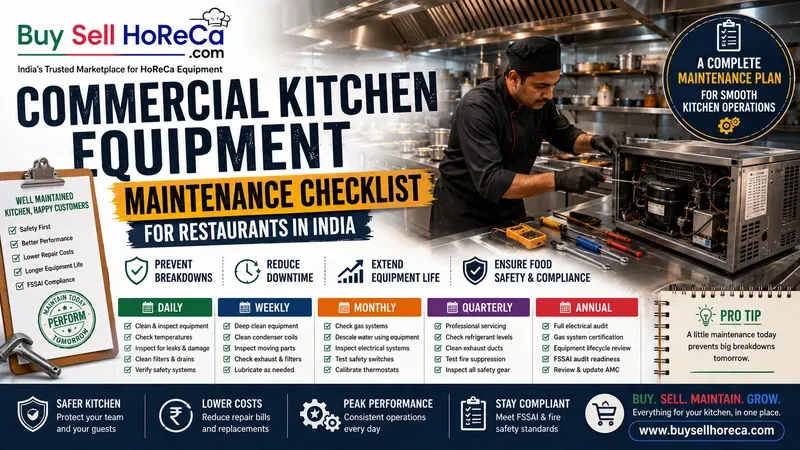
Running a successful restaurant in India demands more than just great food and warm hospitality — it requires a well-maintained kitchen that operates without interruption. From the chaos of a lunch rush to the late-night dinner service, your commercial kitchen equipment is the backbone of every dish that reaches the table.
Yet, equipment maintenance is one of the most overlooked aspects of restaurant management in India. Unexpected breakdowns don't just cost money — they cost reputation. A single malfunctioning piece of equipment can delay orders, compromise food safety, and push your kitchen into chaos during peak hours.
This comprehensive commercial kitchen equipment maintenance checklist is designed specifically for Indian restaurant owners and managers — accounting for local climate conditions, power supply challenges, usage patterns, and the specific equipment found in Indian commercial kitchens.
Why Equipment Maintenance Matters for Indian Restaurants
India's restaurant industry is booming, with millions of establishments ranging from roadside dhabas to five-star hotel kitchens. However, several factors make equipment maintenance particularly critical in the Indian context:
High humidity and heat in coastal and tropical regions accelerate wear on refrigeration units and electrical components.
Frequent voltage fluctuations and power cuts cause strain on motors, compressors, and electronic controls.
Heavy-duty usage — Indian kitchens often run 14–18 hours a day, far longer than Western counterparts.
Dust and particulate matter from open kitchens and outdoor environments clog filters and vents quickly.
Hard water in cities like Delhi, Jaipur, and Chennai causes scaling in steam equipment, boilers, and dishwashers.
Proactive maintenance reduces downtime, extends equipment life, ensures compliance with FSSAI food safety standards, and ultimately protects your bottom line.
The Complete Commercial Kitchen Equipment Maintenance Checklist
This checklist is structured by frequency — daily, weekly, monthly, quarterly, and annual tasks — so your team can build a sustainable maintenance routine.
✅ Daily Maintenance Checklist
Daily checks take 15–30 minutes and prevent the majority of breakdowns.
Cooking Equipment (Burners, Tandoors, Combi Ovens, Grills)
Clean burner grates, drip trays, and grease filters at the end of each service
Inspect pilot lights and ignition systems on gas burners — relight or report if faulty
Wipe down exterior surfaces of ovens, ranges, and grills with a damp cloth
Check tandoor clay lining for cracks or deterioration; allow it to cool before cleaning
Inspect gas hose connections for leaks using soapy water (bubbles indicate a leak)
Ensure all knobs, valves, and controls turn off completely after service
Refrigeration (Walk-in Coolers, Deep Freezers, Under-counter Fridges)
Check temperature readings and log them — refrigerators should be 1°C–4°C; freezers at -18°C or below
Inspect door gaskets/seals for tears, gaps, or mould buildup
Clear any ice buildup around freezer vents and shelves
Wipe down interior walls and shelving with a food-safe sanitiser
Ensure condenser coils are not blocked by items stored behind or around the unit
Dishwashers and Warewashing Equipment
Clean and clear the filter/strainer basket after each wash cycle
Check wash arm spray nozzles for blockages — use a thin wire to clear if needed
Inspect detergent and rinse-aid levels and refill as required
Run an empty sanitising cycle at the end of service
Deep Fryers
Filter or change fryer oil based on quality (use a fryer oil test strip)
Remove and clean the fry basket with degreaser
Wipe down the exterior and surrounding area of all grease splatter
Check the thermostat function by monitoring oil temperature with a separate probe
General Kitchen
Inspect exhaust hoods and remove surface grease from the underside
Check all fire suppression system nozzles above cooking stations — ensure none are blocked
Inspect electrical switches, sockets, and plug points for scorch marks or burn smell
Test MCB (Miniature Circuit Breakers) and ensure no tripped switches
✅ Weekly Maintenance Checklist
Weekly tasks go a level deeper and should be assigned to senior kitchen staff or a designated maintenance person.
Cooking Equipment
Deep clean burner jets and remove carbon buildup using a needle or pipe cleaner
Degrease the inside of convection ovens and combi ovens using an approved oven cleaner
Inspect oven door hinges and handles for damage
Lubricate moving parts on rotisserie units and commercial mixers (refer to manufacturer manual)
Check and tighten any loose knobs, handles, or gas fittings
Refrigeration
Clean condenser coils with a soft brush or compressed air — dust accumulation is the #1 cause of compressor failure in Indian kitchens
Check that evaporator fan motors are running quietly (unusual noise = early warning sign)
Inspect and clean drain pans and drain lines — clogged drains cause water pooling and bacterial growth
Verify that walk-in cooler door hinges are aligned and auto-closing correctly
Exhaust and Ventilation
Remove and soak exhaust hood grease filters in a hot degreasing solution
Clean the inside of exhaust ducts accessible from the hood — heavy grease = fire hazard
Check that exhaust fans are operating at full speed; reduced airflow = inadequate smoke and heat removal
Inspect make-up air units for dust-clogged filters
Food Processing Equipment (Wet Grinders, Mixers, Slicers, Dough Kneaders)
Disassemble removable parts and deep clean with food-safe sanitiser
Inspect blades, grinding stones, and attachments for wear or chipping
Lubricate motor bearings as per manufacturer guidelines
Check power cord insulation for fraying or cuts
✅ Monthly Maintenance Checklist
Monthly tasks are ideal for a formal inspection by the kitchen manager or an external technician.
Refrigeration Systems
Have a certified technician check refrigerant levels — low refrigerant causes compressor overwork and failure
Inspect electrical connections inside the control panel for corrosion
Test door latch mechanisms and replace worn-out gaskets
Calibrate the thermostat against a certified thermometer
Gas Systems and Pipelines
Conduct a full gas line inspection — check connections, flexible hoses, and regulator pressure
Test the LPG or PNG pressure at the manifold against prescribed levels
Inspect all solenoid valves on automatic burner systems
Check that safety flame failure devices (thermocouples) are responsive
Dishwashers and Water-Using Equipment
Descale the dishwasher interior, spray arms, and booster heater using a food-safe descaling agent — critical in hard water zones
Inspect water inlet valves and hoses for leaks or cracks
Clean the steam generator element in combi ovens (if applicable)
Check wash pressure and compare with the equipment manual's specification
Electrical Systems
Inspect all kitchen equipment for proper earthing — this is critical for safety in Indian kitchens where electrical standards vary
Test ELCB (Earth Leakage Circuit Breaker) by pressing the test button
Check voltage stabiliser units attached to sensitive equipment (cold rooms, combi ovens, POS systems)
✅ Quarterly Maintenance Checklist
Quarterly servicing is ideally handled by the equipment manufacturer's authorised service partner or a qualified technician.
Cooking Equipment
Full professional servicing of commercial burner ranges — clean injectors, service valves, and regulators
Calibrate oven thermostats and check baking uniformity
Inspect and service tandoor blowers and combustion chambers
Check and recharge commercial deep fryers with fresh oil; inspect heating elements for scale
Refrigeration
Full compressor health check — measure suction and discharge pressures
Clean and flush evaporator drain lines with a cleaning solution
Inspect door seals, hinges, and closures — replace if compression is inadequate
Lubricate door hinges and moving components
HVAC and Ventilation
Clean and inspect rooftop exhaust fans and belt drives
Replace HVAC air filters throughout the kitchen and dining area
Professionally clean kitchen exhaust ducts — this is also an FSSAI compliance requirement for commercial kitchens
Inspect fire suppression system and ensure fusible links in hoods are intact
Fire Safety Equipment
Check fire extinguisher pressure gauges and inspect for physical damage
Test smoke detectors and heat sensors in the kitchen
Inspect the automatic fire suppression system in the exhaust hood (mandatory for kitchens with commercial fryers and ranges)
✅ Annual Maintenance Checklist
Annual maintenance should involve certified professionals and forms part of your restaurant's compliance documentation.
Full electrical audit by a licensed electrician — check load balancing, earthing, and panel condition
Annual gas system certification from a licensed LPG/PNG service agency
Full professional cleaning and inspection of all exhaust ductwork
Refrigeration system refrigerant handling and certification (required under Environment Protection Act rules for large commercial systems)
FSSAI kitchen audit readiness review — ensure all equipment is in hygienic, functional condition
Review and update AMC (Annual Maintenance Contracts) for critical equipment — cold rooms, combi ovens, dishwashers
Equipment lifecycle assessment — identify units approaching end-of-life for budgeted replacement
Maintenance Tips Specific to Indian Kitchen Conditions
Managing Hard Water Scale
Cities across northern and western India have extremely hard water. Install an inline water softener for dishwashers, steamers, and combi ovens. Descale monthly rather than quarterly if your water hardness exceeds 300 ppm.
Protecting Equipment During Power Fluctuations
Invest in a servo voltage stabiliser (not just a simple AVR) for sensitive equipment like refrigeration compressors and combi ovens. Frequent voltage dips are the leading cause of compressor burnout in Indian commercial kitchens.
Monsoon Season Readiness
Before the monsoon season (June–September), inspect all exhaust hood dampers to prevent backdraft; check rooftop exhaust fans for water ingress; inspect refrigeration units for condensation on electrical components; and ensure your kitchen floor drainage can handle heavy cleaning loads.
Tandoor-Specific Maintenance
The tandoor is central to North Indian, Mughlai, and many regional cuisines. The clay lining (mitti) should be inspected weekly for cracks. Cracked lining affects heat retention and food quality. Replace the lining annually or whenever cracks exceed 1 cm in depth. Keep blower motors dust-free — they fail quickly in dusty environments.
Building a Maintenance Culture in Your Restaurant
A checklist is only effective if it is actually used. Here's how to embed maintenance into your kitchen culture:
Assign ownership — designate a senior chef or kitchen manager as the equipment maintenance coordinator
Use a logbook — maintain a physical or digital maintenance log for every piece of equipment, noting servicing dates, issues found, and parts replaced
Train your staff — conduct a brief monthly kitchen briefing on equipment handling and early problem detection
Create AMCs — Annual Maintenance Contracts with authorised service partners ensure priority response and scheduled visits
Budget for maintenance — allocate 1–2% of annual equipment value per year for maintenance costs
When to Buy vs. Repair
Even the best-maintained equipment eventually reaches end-of-life. If repair costs exceed 50% of the equipment's current market value, or if the unit has broken down more than three times in a year, it may be time to replace rather than repair.
BuySellHoreca.com is India's dedicated marketplace for buying and selling new and used HoReCa equipment — from commercial refrigerators and tandoors to combi ovens and dishwashers. Whether you're upgrading your kitchen or sourcing quality pre-owned equipment at competitive prices, the platform connects restaurant owners directly with verified sellers across India.
Final Thoughts
A well-maintained commercial kitchen is not just a productive kitchen — it is a safer, more compliant, and more profitable one. By following this maintenance checklist tailored for Indian restaurant conditions, you reduce unexpected downtime, extend the life of your equipment, stay ahead of FSSAI compliance requirements, and ultimately deliver a better experience to your guests.
Start with the daily and weekly routines — they are the foundation. Layer in monthly, quarterly, and annual servicing from there. Over time, a disciplined maintenance programme will pay for itself many times over in avoided breakdowns and extended equipment lifespan.
Looking to upgrade or replace kitchen equipment? Explore thousands of new and pre-owned commercial kitchen equipment listings on BuySellHoreca.com — India's trusted HoReCa marketplace.