Kitchen Hygiene and Compliance Checklist for Restaurants in India
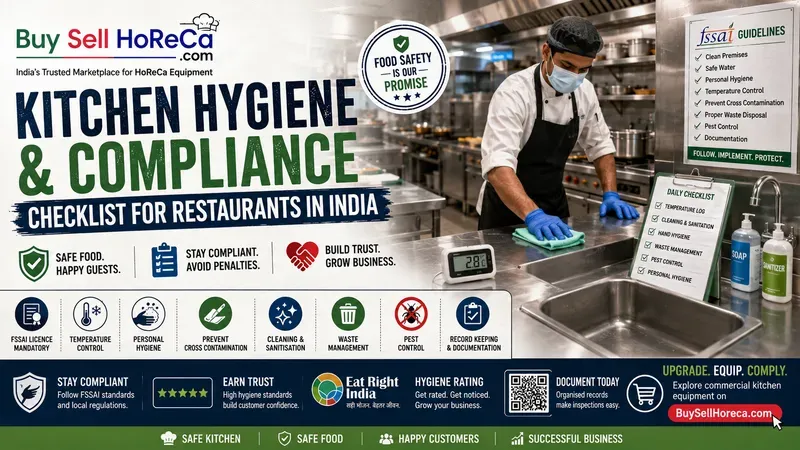
Food safety is not a choice — it is a legal obligation and a moral responsibility. For every restaurant operating in India, maintaining impeccable kitchen hygiene and staying compliant with food safety regulations is the difference between a thriving business and a shuttered one.
India's food service industry is governed by a robust regulatory framework, primarily led by the Food Safety and Standards Authority of India (FSSAI). Yet, despite clear guidelines, hygiene lapses remain one of the leading causes of restaurant penalties, public health incidents, and reputational damage across the country.
Whether you run a quick-service outlet in Mumbai, a fine dining restaurant in Bengaluru, a cloud kitchen in Hyderabad, or a multi-location chain across India — this kitchen hygiene and compliance checklist covers everything your establishment needs to meet regulatory standards and maintain a safe, clean food production environment.
Understanding the Regulatory Framework for Indian Restaurants
Before diving into the checklist, it is important to understand the key regulations that govern kitchen hygiene and food safety in India.
FSSAI (Food Safety and Standards Authority of India)
The primary regulatory body for food safety in India, FSSAI operates under the Food Safety and Standards Act, 2006. All food businesses — from home kitchens to five-star restaurants — must be registered or licensed with FSSAI. The authority sets standards for food hygiene, equipment sanitation, pest control, personal hygiene, water quality, and more.
Key Regulations Applicable to Restaurants
FSS (Licensing and Registration of Food Businesses) Regulations, 2011 — mandatory licensing based on business scale
FSS (Food Products Standards and Food Additives) Regulations, 2011 — standards for ingredients and additives used
FSS (Packaging and Labelling) Regulations, 2011 — for packaged food items sold from the restaurant
Schedule 4 of the FSS Act — the gold standard for food hygiene practices, covering premises, equipment, personal hygiene, and waste management
State-level Food Safety and Drug Administration (FDA) regulations — vary by state and complement FSSAI requirements
Municipal/local body requirements — fire NOC, health trade licence, water supply approvals
Non-compliance can result in fines ranging from ₹1 lakh to ₹10 lakh, licence cancellation, and in severe cases, criminal prosecution under the FSS Act.
Kitchen Hygiene and Compliance Checklist
This checklist is structured across the core compliance pillars that FSSAI auditors and health inspectors evaluate during inspections.
✅ 1. FSSAI Licensing and Documentation Compliance
Valid FSSAI licence or registration displayed prominently at the food premises
FSSAI licence renewed before the expiry date (annual renewal for most businesses)
Separate FSSAI licence obtained for each business location
Food Safety Management System (FSMS) plan documented and available for inspection
Hygiene Rating certificate (if obtained) displayed at the entrance
Health/trade licence from the local municipal corporation current and valid
Fire NOC (No Objection Certificate) from the local fire department current and valid
Pest control records maintained with certificates from a licensed pest control agency
Waste disposal agreement with a certified municipal waste handler documented
Record of all food safety training attended by staff available on request
✅ 2. Premises and Infrastructure Compliance
The physical condition of your kitchen directly affects your ability to maintain hygiene standards.
Walls, Floors, and Ceilings
Kitchen walls finished with smooth, non-absorbent, washable tiles or food-safe paint — no bare brick or plaster in food preparation areas
Floor surfaces non-slip, impervious, and sloped toward floor drains to prevent water pooling
Ceiling free from cracks, flaking paint, condensation stains, or mould
Junctions between walls and floors coved (rounded) to eliminate dirt-trapping corners
No visible gaps in walls, floors, or ceilings that could serve as pest entry points
Lighting
Adequate illumination in all food preparation, storage, and washing areas (minimum 220 lux in work areas; 110 lux in storage areas as per FSSAI guidelines)
All light fittings in food preparation areas fitted with protective covers or shatter-proof bulbs
No flickering lights above food preparation surfaces
Ventilation
Cross-ventilation or mechanical exhaust ventilation adequate to remove heat, steam, and cooking fumes
Exhaust hoods cover all cooking stations — no open cooking without overhead extraction
Ventilation screens and grilles cleaned regularly and free from grease buildup
Kitchen maintains positive air pressure relative to waste areas to prevent contamination
Drainage and Plumbing
Floor drains covered with removable stainless steel grates — cleaned daily
Grease traps installed and emptied at least once a month (or per local municipal requirement)
No cross-connection between potable water supply and wastewater lines
Drainage flows away from food preparation areas, not through them
✅ 3. Water Quality and Supply Compliance
Potable (drinking-quality) water used exclusively for all food preparation, cooking, cleaning, and ice-making
Water supply source identified and tested — municipal supply, borewell, or tanker supply
Water quality test conducted at least once every six months; test reports on record
Overhead water storage tanks cleaned and disinfected at least every six months; records maintained
RO or filtration system serviced and filter elements replaced as per manufacturer schedule
Ice used in beverages made only from potable water; ice handled only with clean tongs or scoops — never by hand
Hot water supply available at all handwashing stations at a minimum temperature of 40°C
✅ 4. Personal Hygiene and Staff Compliance
Personnel hygiene is the single most critical factor in preventing foodborne illness. FSSAI Schedule 4 has specific requirements for food handlers.
Documentation and Health Checks
All food handlers possess a valid medical fitness certificate — renewed annually
Medical screening conducted before hiring; employees with communicable diseases, skin infections, or open wounds not permitted to handle food
Staff records include food safety training certificates (FOSTAC — Food Safety Training and Certification by FSSAI is preferred)
Visitor and contractor entry to the kitchen logged and hygiene rules communicated
Personal Hygiene Practices
All food handlers wear clean uniforms, aprons, and head coverings (caps or hairnets) at all times in the kitchen
Food handlers required to wear disposable gloves when handling ready-to-eat food; gloves changed between tasks and after any contamination event
No jewellery (rings, bracelets, watches, earrings) worn by kitchen staff during food handling
Nails kept short, clean, and unpolished; no false nails permitted
Staff do not eat, drink, chew gum, or use tobacco products in food preparation or storage areas
Staff with cuts or wounds on hands cover them with brightly coloured (detectable) waterproof plasters and wear protective gloves
Handwashing Protocol
Dedicated handwashing basins installed in food preparation areas — separate from food washing or equipment washing sinks
Handwashing basins supplied with liquid soap (not bar soap), disposable paper towels or hot air dryers, and a covered waste bin
Handwashing mandatory: before starting work, after handling raw meat/poultry/fish, after using the toilet, after handling waste, after touching face or hair, after handling chemicals, and after any activity that could contaminate hands
Handwashing procedure poster displayed at every wash station (wet hands, soap, 20 seconds minimum, rinse, dry)
✅ 5. Food Storage and Temperature Compliance
Improper food storage is one of the most cited violations during FSSAI inspections in India.
Dry Storage
Dry goods stored at least 15 cm (6 inches) off the floor on clean, sealed shelving
Dry storage area cool, dry, and well-ventilated — humidity below 60% to prevent mould
All bulk ingredients stored in food-grade, airtight, labelled containers — never left in original sacks on the floor
FIFO (First In, First Out) system strictly followed — older stock moved to the front
No cleaning chemicals, pesticides, or non-food items stored in the same area as food products
All food items labelled with receipt date and use-by date
Cold Storage
Refrigerators maintained between 1°C and 4°C; freezers at -18°C or below
Temperature logs maintained twice daily for all cold storage units
Raw meat, poultry, and seafood stored on the lowest shelves — never above ready-to-eat foods
All items in cold storage covered or wrapped to prevent cross-contamination and moisture loss
No overloading of refrigerators — air must circulate freely inside
Defrosting of frozen food done inside the refrigerator or under cold running water — never at room temperature
High-Risk and Cooked Food
Cooked food not left in the temperature danger zone (5°C–60°C) for more than two hours
Hot holding equipment maintains food at above 60°C until service
Cold holding equipment maintains food below 5°C until service
Leftover cooked food cooled rapidly (from 60°C to 5°C within four hours) using a blast chiller or ice bath before refrigeration
✅ 6. Food Preparation and Cross-Contamination Prevention
Separate colour-coded chopping boards used for different food categories (e.g., red for raw meat, green for vegetables, yellow for cooked food, blue for seafood) — this practice aligns with FSSAI Schedule 4 requirements
Separate knives and utensils designated and clearly marked for raw and cooked food
Raw and ready-to-eat foods never prepared on the same surface at the same time without sanitising in between
Wash-rinse-sanitise procedure followed for all food contact surfaces between tasks
Allergen management protocol in place — staff trained to identify the 14 major allergens; allergen information available for all menu items
No bare-hand contact with ready-to-eat food — tongs, gloves, or utensils used at all times
Marinades used for raw meat never reused for cooked food or as sauces unless boiled first
✅ 7. Cleaning and Sanitisation Compliance
A clean kitchen is not automatically a safe kitchen — sanitisation kills pathogens that cleaning alone does not.
Cleaning Schedule
Written cleaning schedule posted in the kitchen — specifying what is cleaned, how often, by whom, and with which chemical
All food contact surfaces (countertops, chopping boards, slicers, mixers) cleaned and sanitised after every task and at the end of each service
Non-food contact surfaces (floors, walls, shelves, equipment exteriors) cleaned at least once daily
Cleaning equipment (mops, buckets, cloths) colour-coded by zone — kitchen, toilet, and front-of-house items never interchanged
Cleaning cloths laundered or replaced daily — single-use disposable cloths recommended for high-risk areas
Chemical Storage and Use
All cleaning chemicals stored in a separate, locked cabinet — never near food, food equipment, or packaging materials
Chemicals used in correct dilutions as per manufacturer instructions — measuring cups or dispensers provided
Food contact surfaces rinsed thoroughly after sanitiser application before food preparation resumes
All chemical containers clearly labelled; decanted chemicals never stored in food containers (e.g., water bottles)
MSDS (Material Safety Data Sheets) available for all chemicals used in the kitchen
✅ 8. Waste Management Compliance
Waste bins in the kitchen fitted with tight-fitting lids and foot-pedal operation — no open bins in food preparation areas
Waste bins lined with colour-coded bin bags — wet waste and dry waste segregated at source (mandatory under the Solid Waste Management Rules, 2016)
Kitchen waste bins emptied at the end of every service, not just once daily in high-volume kitchens
Dedicated outdoor waste storage area separate from food delivery and receiving zones — kept clean and covered
Organic/wet waste disposed of through a registered waste collector or composted on-site with a licensed system
Used cooking oil (UCO) disposed of through a licensed recycler — not poured down drains (this violates pollution norms and blocks grease traps)
Grease trap cleaned and records maintained — mandatory in many municipalities
✅ 9. Pest Control Compliance
Pest control carried out by a licensed Pest Management Agency — minimum monthly treatment for most urban restaurants
Pest control service records and certificates maintained and available for FSSAI inspectors
Pest sighting log maintained — any sighting of rodents, cockroaches, flies, or other pests recorded and acted upon
All external doors fitted with door sweeps or self-closing mechanisms; windows screened with mesh
No gaps around pipework, cables, or service entries in walls — filled with pest-proof material
No food or water left accessible overnight that could attract pests
Electric fly killer (EFK) units installed near entrances and in food storage areas — not directly above food preparation surfaces; cleaned and emptied weekly
✅ 10. Equipment Hygiene Compliance
All food contact equipment made from food-grade, non-toxic, non-porous, corrosion-resistant materials (stainless steel Grade 304 or above is the standard in India)
No chipped, cracked, or damaged crockery, utensils, or equipment used in food preparation or service — damaged items replaced immediately
Dishwasher final rinse water temperature reaches a minimum of 82°C (180°F) for effective sanitisation, or a chemical sanitising rinse used as an alternative
All equipment disassembled for deep cleaning as per the manufacturer schedule — records maintained
Thermometers used to check food temperatures calibrated and cleaned before each use
Ice machine cleaned and sanitised monthly — ice contact surfaces disinfected; records maintained
✅ 11. Receiving and Supplier Compliance
All food suppliers hold a valid FSSAI licence — copies of supplier licences maintained on file
Food deliveries inspected on arrival — temperature of chilled/frozen goods checked and recorded before acceptance
Rejected deliveries logged with reason for rejection and communicated to the supplier
Delivery vehicles inspected for cleanliness and appropriate temperature maintenance
No food accepted past its use-by or best-before date
Packaging integrity checked — no dented, swollen, or damaged canned goods accepted
Receiving area kept clean and separate from food preparation areas
✅ 12. Cloud Kitchen and Takeaway-Specific Compliance
With the rapid growth of cloud kitchens in India, the following additional compliance points apply:
Packaging materials food-grade and FSSAI-compliant — no newspaper or unlined cardboard in direct contact with food
Tamper-evident seals used on all delivery packaging
Delivery bags insulated and clean — hot and cold foods transported separately
Online food aggregator (Zomato, Swiggy) hygiene ratings maintained and displayed on the app profile
FSSAI licence number displayed on all food packaging and menus (mandatory for cloud kitchens)
Aggregator platform hygiene audit compliance maintained — Zomato and Swiggy both conduct periodic kitchen audits
Building a Compliance Culture in Your Restaurant
A checklist is only as good as the culture behind it. Here is how to make compliance a daily habit rather than a pre-audit scramble:
Appoint a Food Safety Supervisor (FSS) FSSAI mandates that larger food businesses appoint a trained Food Safety Supervisor. Even if not legally required for your scale, designating one person as the compliance anchor improves accountability significantly.
Conduct Internal Mock Audits Run an unannounced internal inspection once a month using this checklist. Identify gaps before an official inspector does. Document findings and corrective actions taken.
Train Staff Continuously FSSAI's FOSTAC (Food Safety Training and Certification) programme offers affordable, certified training for food handlers and supervisors. Make it a mandatory onboarding requirement for all kitchen staff.
Maintain a Compliance Register Keep a single binder or digital folder containing: FSSAI licence, health trade licence, fire NOC, pest control certificates, water test reports, staff medical certificates, training records, and cleaning logs. This makes inspections faster and less stressful.
Display What Is Mandatory FSSAI requires certain information to be displayed in the restaurant — including the FSSAI licence, the name and contact of the Food Safety Officer, and (for eating establishments) the Hygiene Rating certificate if obtained. Non-display is itself a violation.
FSSAI Hygiene Rating Scheme
India's FSSAI Hygiene Rating Scheme (Eat Right India initiative) allows restaurants to voluntarily undergo a third-party audit and receive a hygiene rating from 1 to 5. A higher rating:
Builds consumer trust and drives footfall
Is displayed on Zomato and Swiggy profiles — directly influencing order volume
Reduces the frequency of surprise inspections for high-rated establishments
Demonstrates commitment to food safety beyond minimum compliance
Aiming for a 4 or 5-star Hygiene Rating is one of the best investments a restaurant can make in its brand equity.
Final Thoughts
Maintaining a hygienic kitchen and staying compliant with India's food safety regulations is not just about avoiding fines — it is about building a restaurant that guests trust, staff take pride in, and regulators respect. The checklist above covers every major compliance dimension that FSSAI and municipal health inspectors evaluate.
Start with the non-negotiables: a valid FSSAI licence, documented pest control, temperature logs, and staff hygiene practices. Build from there into a complete, embedded food safety system.
For restaurants looking to upgrade kitchen infrastructure to better support hygiene and compliance — from stainless steel workbenches and commercial dishwashers to refrigeration units and exhaust systems — explore the listings on BuySellHoreca.com, India's dedicated marketplace for new and pre-owned commercial kitchen and hospitality equipment.
Equip your kitchen right. Stay compliant. Stay trusted. Explore commercial kitchen equipment on BuySellHoreca.com
Frequently Asked Questions
Need a Printable Copy?
Download this commercial guide as a formatted PDF to share with your staff, technicians, or print for your kitchen workspace.